Wednesday, 31 July 2013
Is it time for a new type of companion on Doctor Who?
Neil Gaiman supposedly wrote his first draft of Nightmare of Silver with the Victorian version of Clara from The Snowmen. Steven Moffat obviously changed his mind about this and went for another modern day girl. But what if he had stuck to his guns? Would this have made Series 7 better?
Since the modern series began in 2005, every companion from Rose Tyler to Clara Oswald has originated from 21st century Earth. The producers argue that this is because the companion must be someone that audiences can relate to. They are our viewpoint into a crazy world of space and monsters. The best examples of this from the original series are Ian Chesterton and Barbara Wright. They were just ordinary school teachers in an unremarkable London comprehensive. There were many scenes in the early episodes focusing on their reactions to unusual situations.
But as the classic series went on, the producers tried out different variations such as a jacobite from the past, an alien maths genius from a pocket universe and even a robot dog! Some of these risks paid off, some of them didn't, but at least the producers were trying to make things interesting. By playing it safe, the show may in danger of becoming predictable.
And being from modern day Earth is no guarantee that the companion will be well defined. I don't think fans of the classic series would have complained if the resourceful and intelligent 16th century serving girl Anne Chaplet had joined the Tardis crew at the end of The Massacre instead of the contemporary but dull Dodo Chaplet. A similar situation applies to the modern series. There is little in Series 7 that defines Clara as a modern woman. She has no family, hobbies or anything that ties her to the modern world. She might as well be a Victorian. There is certainly nothing in the adventures that requires her to be modern. It's easy to imagine that Bells of St John could be first trip in the Tardis for the Victorian Clara. Through her eyes we could see the wonder in the modern world that we take for granted. The computer skills download that she gets from the Spoonhead could have been a useful plot device to enable Victorian Clara to learn about the modern world very quickly.
Personally, I feel that a one off experiment would be good. I don't want Jenna Coleman to leave for a long time, but when she does, maybe the producer could try something a bit different?

Wednesday, 24 July 2013
Knightmare Returns!
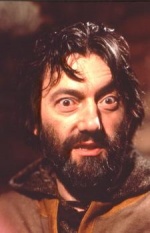
This is great news! I remember watching some of the later episodes of the show on CITV when I was younger. I was able to enjoy it again recently, during the CITV’s “Old Skool Weekend”, earlier this year. And now, fans will get to enjoy a whole new episode. Good times!
I'm definitely going to try and watch this if I get the chance.
Tuesday, 18 June 2013
Pandas, Gardening and the colourful lives of artists, at the Lightbox
For any art enthusiasts who are crazy enough to be reading this blog, The Lightbox Museum and Art Gallery in Woking is currently running some very interesting exhibitions.
The main exhibition on at the moment is ‘Gertrude Jekyll: Landscape Gardener and Craftswoman” which, as the title makes obvious, is about the life of garden designer Gertrude Jeckyll. The exhibition itself is very well designed and well worth seeing, even for people like me who are not that enthusiastic about gardening.
Pandamonium is a collection of artworks that are commissioned in support of the World Wildlife Fund. The WWF are building a new centre nearby and their work towards helping wildlife is very important. There are some very humorous works of art, made using the panda collection boxes which were discontinued in 2007.Others might be fascinated by some of the fashion designs, such as a dress of flowers which will become more colourful when water is applied. It is the only dress that women wouldn’t mind spilling liquid over.
Finally, the Ingram Collection includes works from a diverse range of contemporary artists, including Eduardo Paolozzi, John Bratby and many others. I particularly liked the Paolozzi piece.
So, if you’re reading this you like art galleries or museums then come along. And if you have visited before, why not come back and bring someone who hasn’t been yet?
Sunday, 2 June 2013
Farewell to Matt Smith
So, yeah, no more Eleventh Doctor after the 2013 Christmas Special.
Damn. I was hoping he would do Series 8, at least. It's a bit of a shame that in his four years of being the Doctor, Matt has only been able to complete three whole series. This also means that the 50th anniversary celebrations are now going to be overshadowed by the gloom of knowing about the Eleventh Doctor’s departure.
Still, while part of me is sad that Matt is going, the more rational side of me knows that I should respect his decision. If he personally feels that now is the right time to go then fandom should support him. It’s better for him to go out on a high and look for new opportunities than to get bored and feel trapped in the same old role
The first time I saw Matt Smith was in 2006 when he played 'Jim' in The Ruby in the Smoke. I thought he was okay in the role but I would never have considered him for the role of the Doctor.
A couple of years later, when he was revealed as the Eleventh Doctor in The Eleven Doctors confidential special, I was one of the doubters. How could this young man possibly play a 900 year old Time Lord? I imagined Series 5 would be full of scenes of him being overshadowed by his older, more experienced, more charismatic fellow cast members and unable to stand up to the villains. The promotional shot of him in the dark suit, standing by the Tardis did him no favours in my eyes. It made him look like an emo Doctor who had been tailored to appeal to the teenage demographic.
Then, in July 2009 we saw the first pictures of Matt in his tweed jacket and bow tie and I really liked it. It was a relief to see that he would not be an emo Doctor after all, and I was fascinated that Matt's had chosen to play the Doctor as a more of a professor than the previous new series Doctors. As the months went by I got more snippets about the new Doctor. Then, on 1st January 2010, the Eleventh Doctor made his screen debut in The End of Time. In only a few minutes of screen time Matt Smith proved that he could be quirky and funny. This new Doctor was starting to show great promise.
A couple of years later, when he was revealed as the Eleventh Doctor in The Eleven Doctors confidential special, I was one of the doubters. How could this young man possibly play a 900 year old Time Lord? I imagined Series 5 would be full of scenes of him being overshadowed by his older, more experienced, more charismatic fellow cast members and unable to stand up to the villains. The promotional shot of him in the dark suit, standing by the Tardis did him no favours in my eyes. It made him look like an emo Doctor who had been tailored to appeal to the teenage demographic.
Then, in July 2009 we saw the first pictures of Matt in his tweed jacket and bow tie and I really liked it. It was a relief to see that he would not be an emo Doctor after all, and I was fascinated that Matt's had chosen to play the Doctor as a more of a professor than the previous new series Doctors. As the months went by I got more snippets about the new Doctor. Then, on 1st January 2010, the Eleventh Doctor made his screen debut in The End of Time. In only a few minutes of screen time Matt Smith proved that he could be quirky and funny. This new Doctor was starting to show great promise.
Finally, in April 2010, “The Eleventh Hour” aired and any remaining doubts were dispelled. Matt Smith proved that he could act well with children, be funny and stand up to the enemies. Since then he’s got better and better and now I find it difficult to imagine anyone replacing him.
I became a fan during the Wilderness Years so I never got attached to any particular Doctor as I was watching all of their stories out of order. But once the new series started I was able to watch all of them in order, and Matt Smith is the Doctor that I have connected with the most. It’s going to take me a while to adjust to the notion of a Twelfth Doctor.
Still, it's not over just yet. Matt is still the Doctor until the end of the year. If I have any message for Matt Smith then it's this: Thanks for being the Doctor, Matt! They said no one could replace David Tennant but you managed it. You made bow ties cool. You’ve been brilliant and I hope you go on to do greater things!
Wednesday, 22 May 2013
Doctor Who: The Name of the Doctor

This is the episode we have all been anticipating. The episode that was supposed to pay off the reference to Trenzalore at the end of Series Six. The episode that was supposed to resolve the mystery of Clara Oswald, the girl who died twice. It didn't seem like Steven Moffat would be able to tie up so many loose threads in only 45 minutes. Fortunately, as before, he has proved himself capable of handling such an assignment.
The story involves Vastra, Jenny and Strax being abducted by creatures called the Whispermen on behalf of the Great Intelligence. The Doctor is forced to follow them to Trenzalore, where his future self is buried. Steven Moffat may well have been inspired by the Eight Doctor novel, Alien Bodies. Both stories feature the Doctor coming across his own dead body which his enemies are after. But while in Alien Bodies, the aliens wanted to borrow items from the Doctor’s timeline, here, the aliens are using the Doctor’s timeline to rewrite his history. Moffat goes one step further than Miles by making the Tardis the Doctor’s tomb.
While it was nice to see the return of the Great Intelligence, once again in the form of Richard E Grant, the villain did not accomplish very much. The Intelligence’s scheme was to erase the Doctor from the timelines was something that could have been done by any of the Doctor's old enemies. The intelligence of old never struck me as a self destructive type, as this scheme would have it. Apparently the Intelligence can now travel through time and is completely aware of the Doctor. The Intelligence's servants, the Whispermen, are pretty chilling creatures, along the lines of the Gentlemen from Buffy the Vampire Slayer, although they don't really do anything other than act as sentries and kidnappers.
The Paternoster Gang, were once again a great deal of fun. Vastra got a lot more emotional material. It was slightly annoying that Jenny was killed and came back to life, but then again I would’ve missed the character. Strax was just the same as ever.
Jenna Louise Coleman once again is good as Clara. She gets a bit more to work with in her decision to jump into the timeline and her memories of her mother. The mystery of Clara Oswald is almost given away in the first few moments. It is no surprise when she does jump into the Doctor’s time stream. Now that this mystery has been resolved, maybe the creators can let us get to know her a little better in Series 8. Clara really needs an episode like The Girl Who Waited or Turn Left to explore what she is really like.
I had been dreading River Song's return ever since I found out that she was coming back.. Her death in the library in Forest of the Dead was perfect and I didn't want it undone. I was also worried that it would be a gratuitous appearance, that Steven Moffat simply could not bare losing his favourite character and wanted her to go on forever. Fortunately I was proved wrong as this version of River is essentially a ghost, hanging around at the sidelines of the adventure and offering advice rather than being directly involved. Her final conversation with the Doctor and their kiss feel like the end of unfinished business that will allow her to depart the plane. Still, I have a feeling we may still see River Song again, but if this does turn out to be her final appearance, it is still a great ending to go out on.
There are the usual elements that Steven Moffat likes to recycle. The ending, of Clara appearing in the Doctor’s past is slightly reminiscent of The Big Bang, especially when the Doctor attempts to bring her back by appealing to her memories.
The best moment of the episode is reveal of the Other Doctor, played by John Hurt. This is the scene where the true meaning of the “Name of the Doctor” title becomes apparent. All the way back in The Beast Below, the Doctor told Amy that he'd have to give up the name of the Doctor if he killed the Star Whale. Now we are seeing an example of an incarnation of the Doctor who has lost the right to be called by that title. My theory, based on the evidence of spoiler photos, is that he is probably a Time War Doctor. I’m hoping that this is not a hoax, because this could be a very interesting direction to take the Doctor into.
There is still the unanswered question of who is the ”Shop Girl” was who first gave Clara the Doctor’s phone number. Will it be answered in the 50th? The next season, or has Moffat forgotten? We’ll have to wait until 23rd November to find out.
The Name of the Doctor is not a perfect episode by any means, but it answered all of the important questions and ended with a great new mystery. I can’t wait to see what Steven Moffat has in store for us with the 50th anniversary episode!
8/10
Thursday, 16 May 2013
Doctor Who: Nightmare in Silver

Neil Gaiman's first Doctor Who script, The Doctor's Wife, was one the more successful episodes of Series Six, and also a personal favourite of mine. It was great to finally have a story which properly explored the notion of the Tardis as a living thing. For his second go, Neil Gaiman attempted to make the Cybermen scary again. In this he has only partially succeeded.
The basic story is that of the Cybermen hunting down soldiers on an abandoned theme park world.Unfortunately there are lots of unnecessary elements added into the mix, such as the Doctor playing chess against the Cyber Planner, and the impresario Webley collecting the shells of Cybermen, all of which feel like they were distracting from the main purpose.
Still, there's an interesting attempt at world building going on in this episode. The future is ruled by an Empire which has been at war with the Cyberiad, a term which apparently refers to all the different Cyber Variants, such as Cyber-Mats and Cybershades. . Gaiman also adds to the notoriety of the Cybermen by suggesting that a whole galaxy had to be wiped out in order to stop a Cyberman. Even now, if a Cyberman is found then a planet must be destroyed. This goes a long way to making them seem threatening again.
The new Cybermen look fantastic. Their new design is sleeker and more streamlined compared to the chunky Cybus versions. They may not be as physically intimidating as their 2006 predecessors but with their fast running they seem to be more mobile and have more movement.
The best new feature is their ability to upgrade and adapt to any weaponry used against them. Some have argued that this makes the Cybermen too similar to Star Trek's Borg, but since the Borg were borrowed from Cybermen anyway, it is not much of a problem. The new voices are neither better nor worse. Just different. Overall, these new Cybermen are the best part of the episode, even if they play second fiddle to the Cyber Planner. A much better redesign than the Dalek paradigm.
The Cybermites are awesome. More mobile than the cumbersome Cybermats of old. It is creepy when they crawl out of the shell of an old Cyberman. They are more than worthy of being permanent replacements.
Matt Smith gets a lot to do this week, playing both the Doctor and the Cyber-Planner Doctor.
The Cyber Planner version is very camp and over the top, its exaggerated mannerisms and voice is a reminder of how much more depth Matt Smith usually puts into the Doctor.Part of me feels the Cyber Controller should have been more emotionless though.
Jenna Louise Coleman is once again great in the role of Clara. She gets a lot to do this week in ordering a military platoon around. However, she seemed a bit too efficient with a gun for someone who had never been a soldier before. Perhaps this is a clue that she is secretly the Doctor's perfect companion. Or it could just be the writing.
While I don't share Who fandom's general hatred towards child characters, I found that Artie and Angie were a bit annoying. Angie especially so. Her first line in the episode is "Your stupid box can't even get us to the right place". Most people would be amazed that the box even could travel in time and space, but not Angie. Once the Cyberman plot commences there's no time to see Artie and Angie's reactions to being in an alien world. The story doesn't even show us their first reactions to stepping into the Tardis. As a result the characters feel like they were bolted onto the story.
Warwick Davies is great as Porridge. The revelation that he is the Emperor is pretty obvious,, but he gets the most development of any of the other characters. The character is very similar to the Doctor, being a man who has to blow up his own people and couldn't live with the guilt. I wasn't convinced by his proposal to Clara. The two characters hadn't spent that much time together and the proposal felt like it came out of the blue.
The rest of the cast are sadly pretty unmemorable. The punishment Platoon are one dimensional characters with single character traits. When they are killed you do not care them. I liked the showman character, Webley, but he very quickly becomes unnecessary to the plot.
The mystery of Clara is once again not developed. All we get is the obligatory scene where the Doctor puzzles over his 'impossible girl' along with a hint that he fancies Clara. Next week's episode, the final one in the series, has a lot to live up to.
This is a pretty uneven episode. It might have benefited from having a streamlined plot, like Cold War had. If the focused was entirely on the revival of the Cybermen and not on the Doctor's chess game, or the kids, it might have worked a lotbetter. With the last shot of a Cybermite floating in space, we'll undoubtedly see these Cybermen again. Let's just hope their next appearance is a lot better.
7/10
Wednesday, 8 May 2013
Doctor Who: The Crimson Horror

It's hard to believe that Vastra, Jenny and Strax have only appeared in three Doctor Who stories so far. It feels as if they have been around for much longer. The character of Madame Vastra only exists because John Barrowman wasn't available to play Captain Jack in A Good Man Goes to War, but she and the other gang members feel like they're as important to the Matt Smith era as UNIT did to the Jon Pertwee era. This Doctor-lite episode gives the writer, Mark Gatiss, a chance to show these guys investigating without the Doctor.
The year is 1893. Bodies are turning up in Yorkshire covered in what the pathologist calls "the Crimson Horror", a substance that turns peoples' bodies waxy and red. The Paternoster Gang are investigating the death of one of the victims when they find the image of the Doctor left on the eye of the dead man.
Jenny has been the least developed of the three Gang members, so it is great that she is the one who is sent to the Yorkshire town of Sweetville to investigate, allowing her to take centre stage for a while. We get to see her infiltrate, fend for herself, and martial arts skills against the supermodel residents of the factory town. She also gets an opportunity to save the Doctor when he is found, infected with the crimson horror and being held prisoner
Vastra takes more of a back seat. However, she is the only one who is able to recognize that the Crimson Horror originated from the Jurassic period. Strax continues to be a slightly one joke character, threatening to shoot everything and everyone.
After Jenny rescues the Doctor, and he somehow uses the sonic screwdriver to cure himself and Clara of the disease, the Paternoster Gang take more of a back seat as the Doctor takes charge. Matt Smith seems to be playing the Doctor on autopilot this week. Since it is a comedy episode, and his supporting cast are taking a more important role, the Doctor doesn't have to do much.
The mastermind behind the Crimson Horror is Mrs Gillyflower, a very arch villain played expertly by Dame Diana Rigg. She manages to balance out the archness with the seriousness. It is not entirely clear since she is planning to poison the world and preserve perfect people to survive. Still, this episode is such a barrel of laughs you never stop to care. Mrs Gillyflower's daughter, Ada, is a more sympathetic, and slightly more human character. One of the only blind characters to appear in the whole of Doctor Who. Rachel Sterling portrays Ada in a more downplayed note. It is funny to see mother and daughter actor in reverse roles.
The creature motivating Mrs Gillyflower, Mr Sweet is a sickly red parasite attached to Mrs Gillyglower's body. There is something disgusting about the little thing. Its death at Ada's cane are wonderfully gooey and sick.
Where Cold War was a love letter to the Ice Warriors, Gatiss is writing his other favourite retro genre, the penny dreadful. The pathologist felt like a character from The League of Gentlemen. It also borrows heavily from the James Bond film Moonraker, with a rocket taking off and a villain wanting to poison the world so that a new master race can take over. Pastiche is nothing new in Doctor Who. It is Gatiss' confidence in playing with his favourite genres that makes the plot feel so good.
One negative aspect to this tale is that, once again, we get no progress on Clara's true identity.
The reason this story happens is because the Doctor took Clara to 1893 to relate her to the Governess Clara from The Snowmen. But by the end of the episode, they leave the Victorian period, no closer to any answers. Another problem is the unconvincing on ending where Clara's kids, Artie and Angie, reveal that they have seen Clara's picture in old photographs and blackmail their carer into taking them in the Tardis or else they will show their dad. It's hard to believe their dad would believe his children, rather than thinking it was just a photoshop job.
A few niggles aside, The Crimson Horror is a strong episode. All of the jokes are funny, witht he possible exception of the cheesy "Thomas Thomas" joke. It is better than Gatiss' other episode, Cold War and on par with The Unquiet Dead as one of the best scripts he has written for the new series. I'm not convinced it makes him good enough to be the next show runner, but it does show that he has promise.
8/10
Subscribe to:
Posts (Atom)